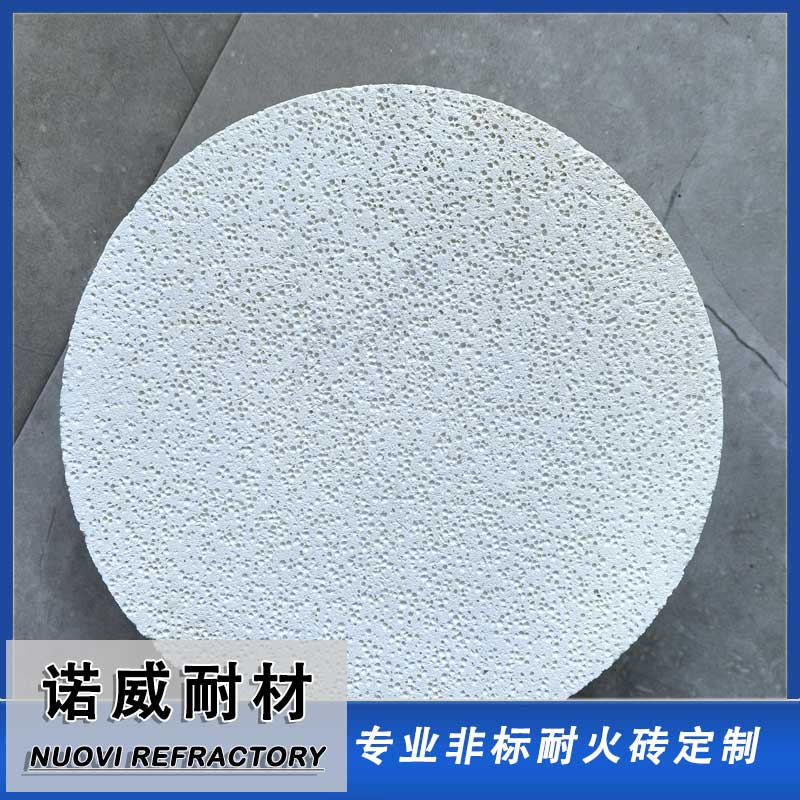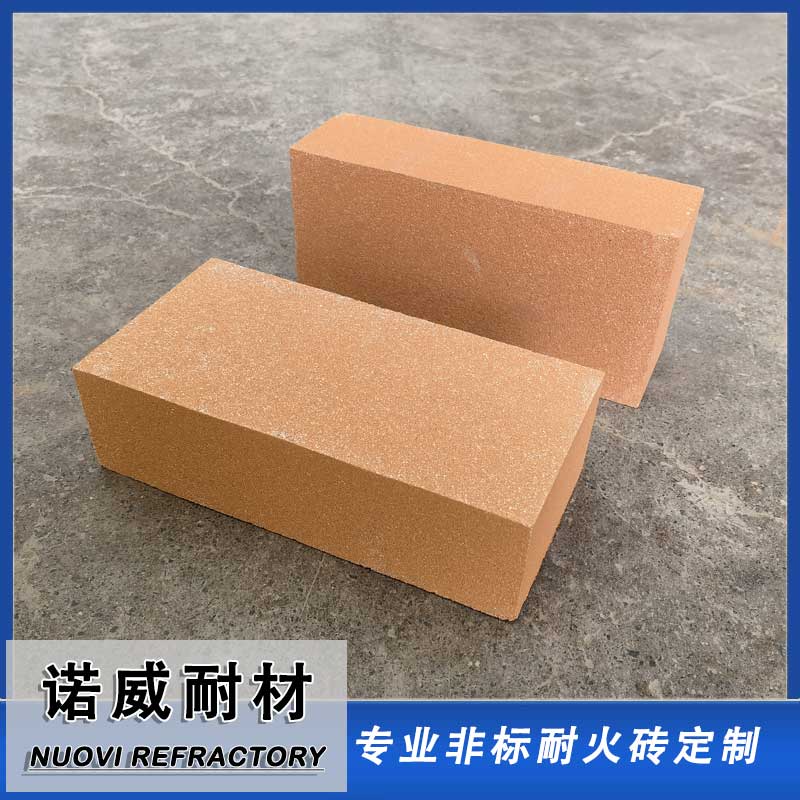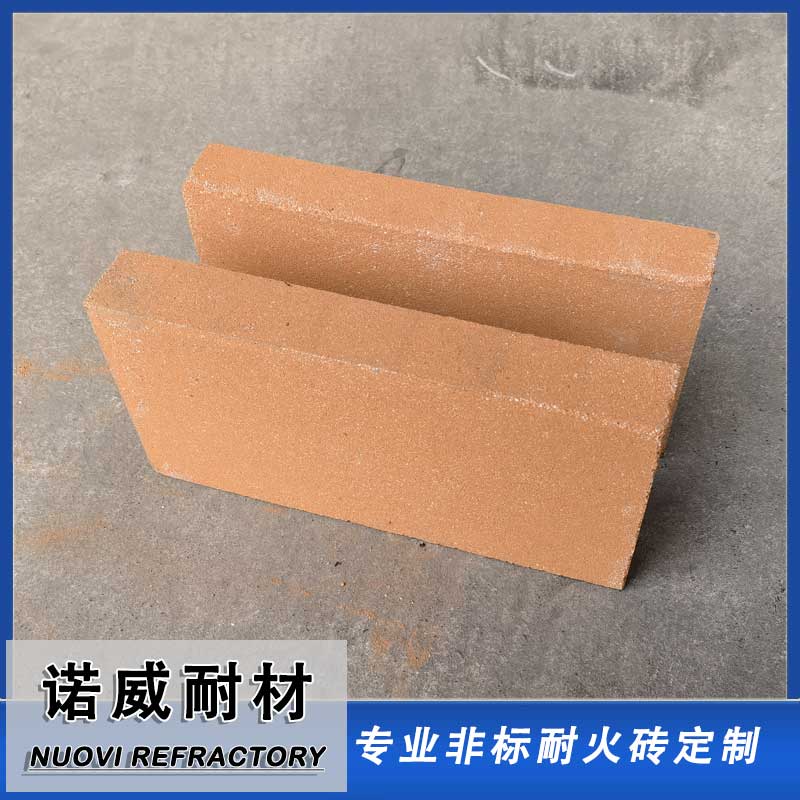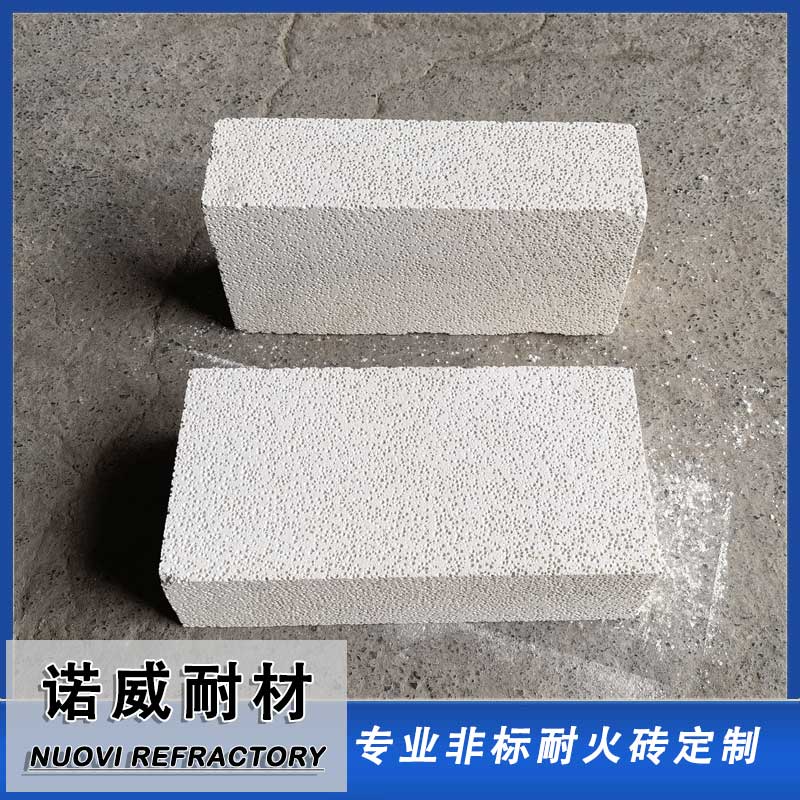
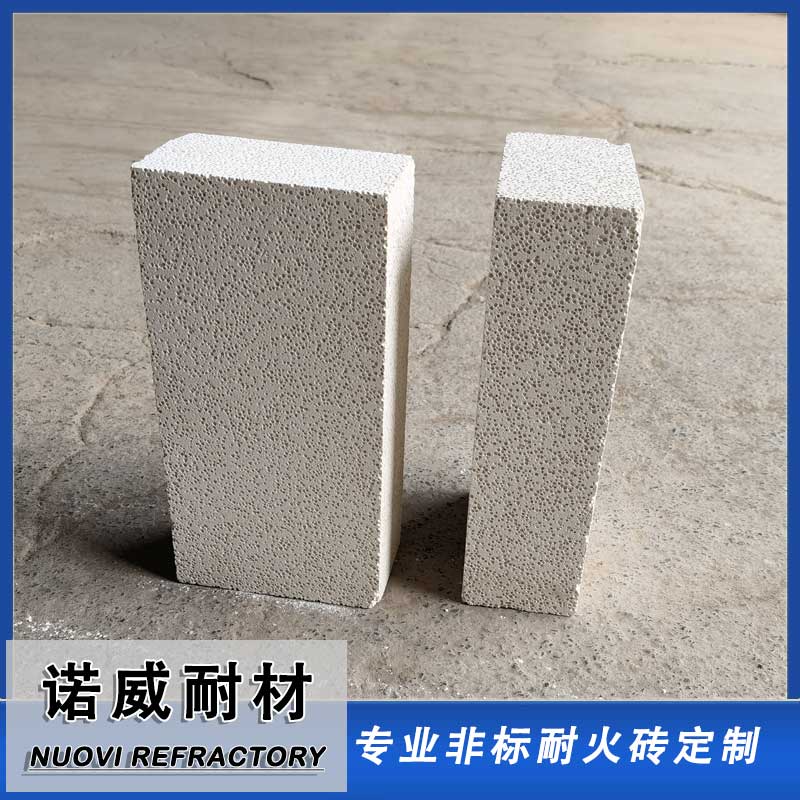
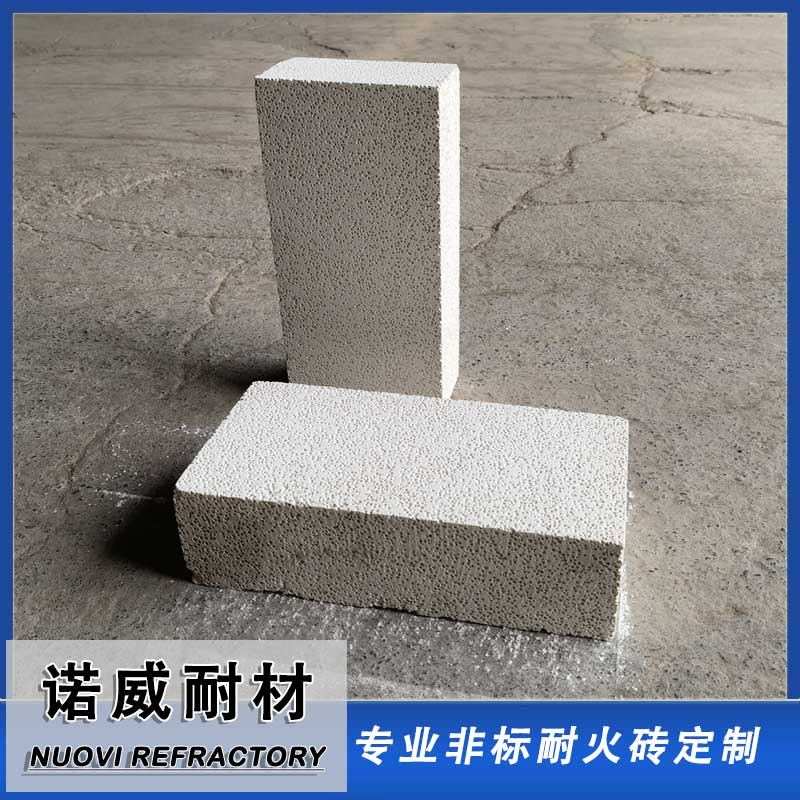
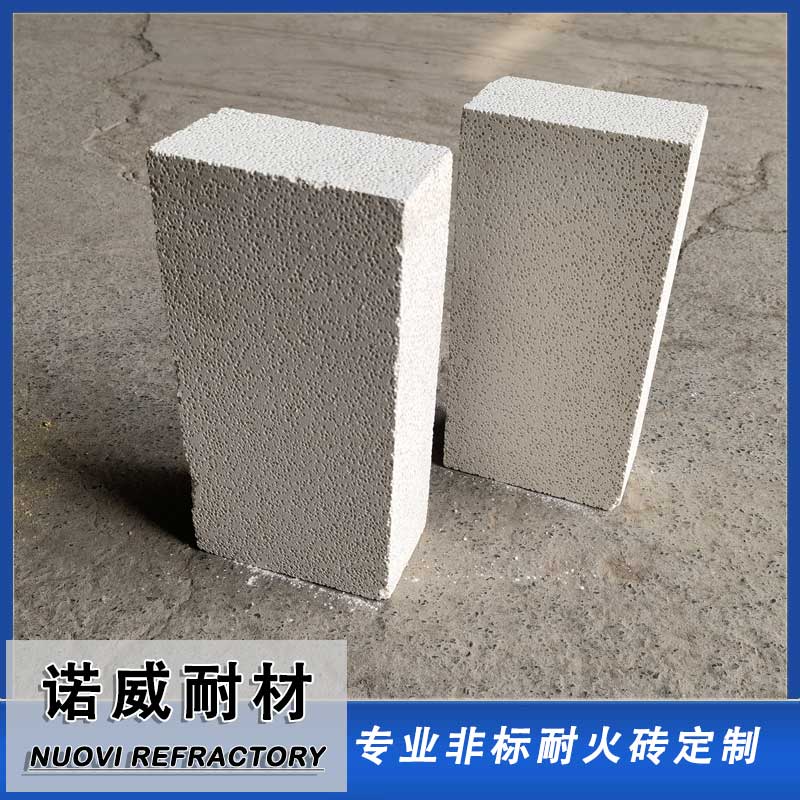
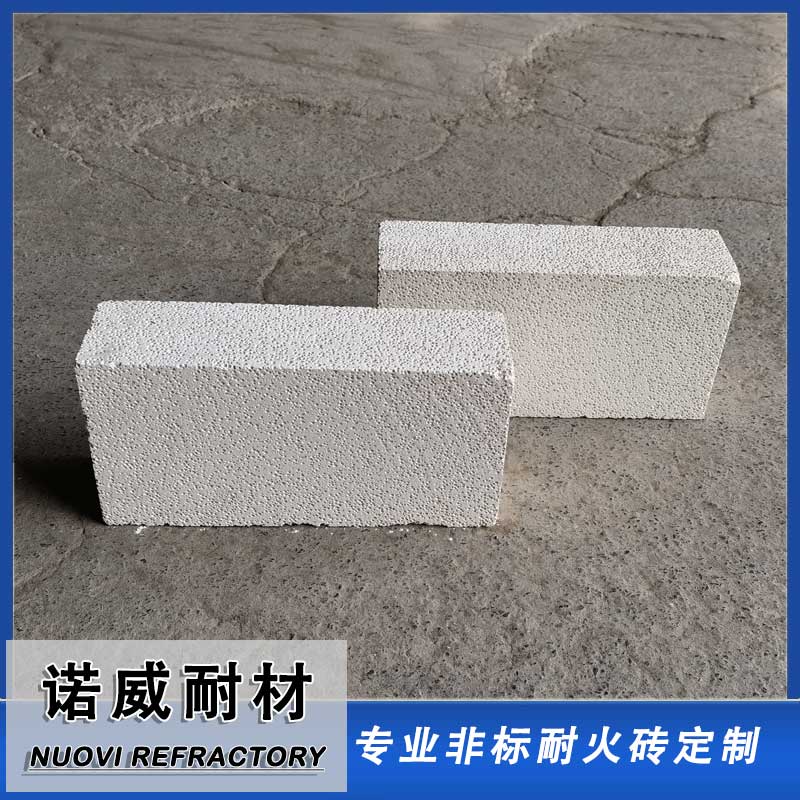
Mullite Insulation Brick - Standard
Lightweight Mullite SeriesMullite insulation brick (standard) with mullite as the main crystal phase, featuring high-temperature strength, low thermal conductivity, and good thermal shock resistance. Ideal insulating material for various industrial kilns.
| Parameter | Specification |
|---|---|
| Material | Lightweight Insulation |
| Max Service Temperature | 1200-1400°C |
| Bulk Density | 0.6-1.0 g/cm³ |
| Thermal Conductivity | ≤0.35 W/(m·K) |
| Cold Crushing Strength | ≥2.0 MPa |
Material Introduction
Mullite insulation brick (or lightweight mullite brick) is a high-alumina refractory material with mullite (3Al₂O₃·2SiO₂) as the main crystal phase. The alumina content generally ranges from 65% to 75%. In addition to mullite, the mineral composition includes small amounts of glass phase and cristobalite for lower alumina types, and small amounts of corundum for higher alumina types. The refractoriness is relatively high, reaching above 1790°C.
Mullite insulation bricks play important roles in multiple industrial fields due to their high-temperature resistance (1260-1700°C), low thermal conductivity, thermal shock resistance, and strong chemical stability. In the glass industry, they are used in regenerators, crown, breast walls, and channels of glass melting furnaces, withstanding glass liquid erosion and high-temperature flame impact, improving melting efficiency and extending furnace service life. They are suitable for critical high-temperature areas in float glass, borosilicate glass, and other high-end production lines.
Based on alumina content and refractoriness, the main models include:
JM23 (Al₂O₃ 38-44%, refractoriness 1350℃)
JM26 (Al₂O₃ 50-58%, refractoriness 1450℃)
JM28 (Al₂O₃ 65-70%, refractoriness 1550℃)
JM30 (Al₂O₃ 70-73%, refractoriness 1600℃)
JM28/JM30 are selected for high-temperature zones (such as glass melting furnaces), and JM26 for medium-temperature zones.
Clay insulation brick is a lightweight refractory product with alumina (Al₂O₃) as its main component, typically containing 30% to 48%. It uses clay clinker or lightweight clay as the main raw materials, with plastic clay added, and is produced through the combustible material method, foam method, or chemical method to form a porous structure.
Product Features
- Mullite main crystal phase with good high-temperature stability
- Low thermal conductivity for excellent insulation
- Standard brick shape for convenient construction
- Good thermal shock resistance for long service life
- Low bulk density, reduces furnace body load
Specification Parameters
| Index | JM23 | JM26 | JM28 | JM30 |
|---|---|---|---|---|
| Classification Temperature (℃) | 1260 | 1430 | 1540 | 1650 |
| Bulk Density (g/cm³) | 0.55-0.62 | 0.78-0.8 | 0.88 | 1.03 |
| Cold Crushing Strength (MPa) | ≥ 1.2 | ≥ 1.6 | ≥ 2.1 | ≥ 2.5 |
| Modulus of Rupture (MPa) | ≥ 0.9 | ≥ 1.4 | ≥ 1.6 | ≥ 2.1 |
| Reheating Linear Change (%) | 1230℃: -0.5 | 1400℃: -0.5 | 1510℃: -0.5 | 1620℃: -0.5 |
| Thermal Expansion 1000℃ (%) | 0.5 | 0.7 | 0.8 | 0.9 |
| Thermal Conductivity @ 400℃ (W/m·K) | 0.14 | 0.27 | 0.32 | 0.41 |
| Thermal Conductivity @ 600℃ (W/m·K) | 0.16 | 0.29 | 0.34 | 0.43 |
| Thermal Conductivity @ 800℃ (W/m·K) | 0.18 | 0.31 | 0.36 | 0.44 |
| Thermal Conductivity @ 1000℃ (W/m·K) | 0.20 | 0.33 | 0.38 | 0.45 |
| Al₂O₃ (%) | ≥ 37 | ≥ 54 | ≥ 64 | ≥ 72 |
| Fe₂O₃ (%) | ≤ 1.0 | ≤ 0.9 | ≤ 0.8 | ≤ 0.7 |