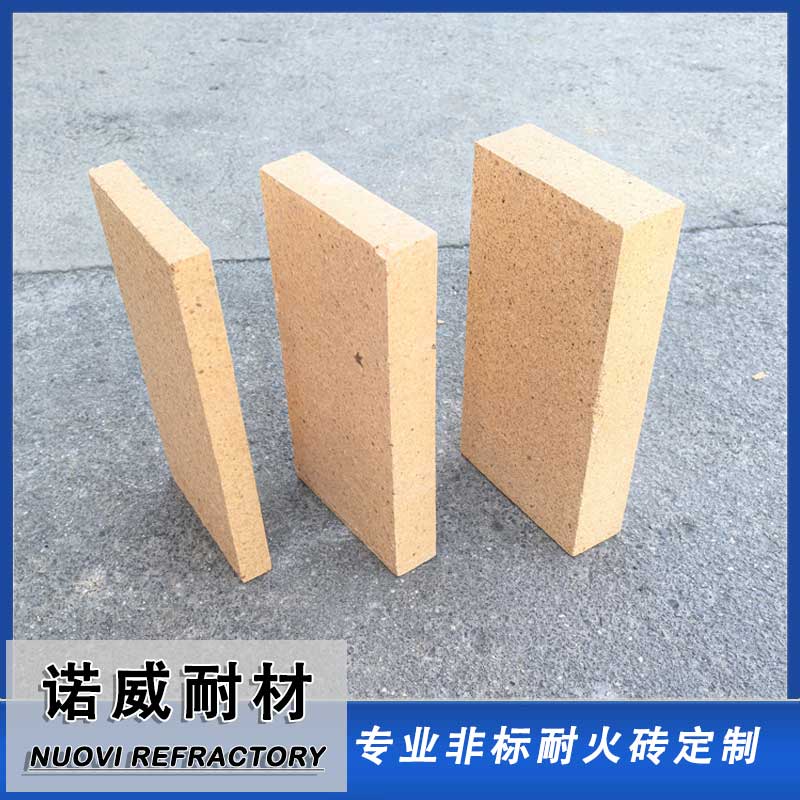
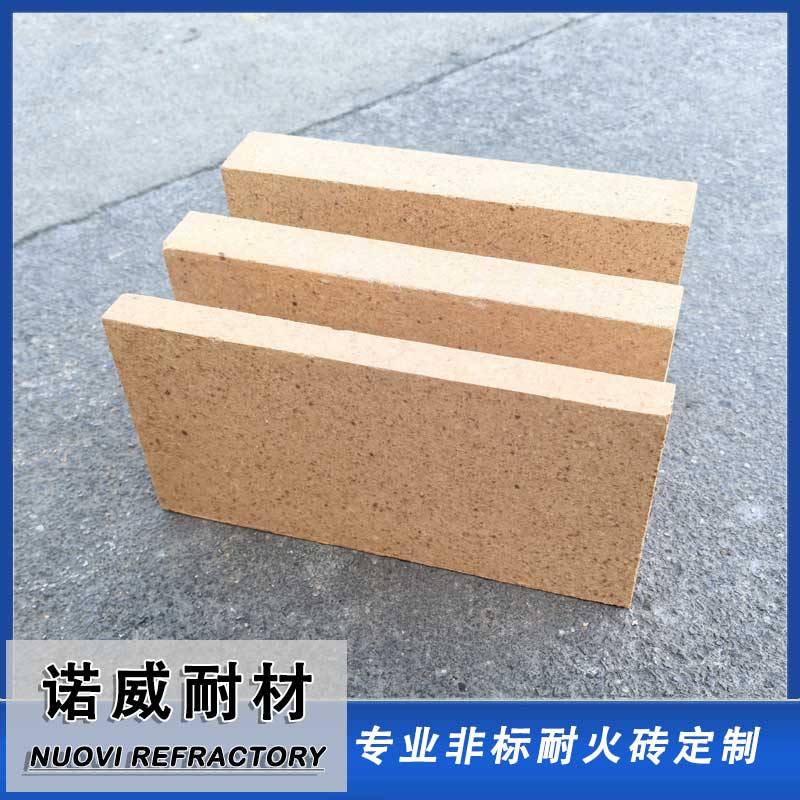
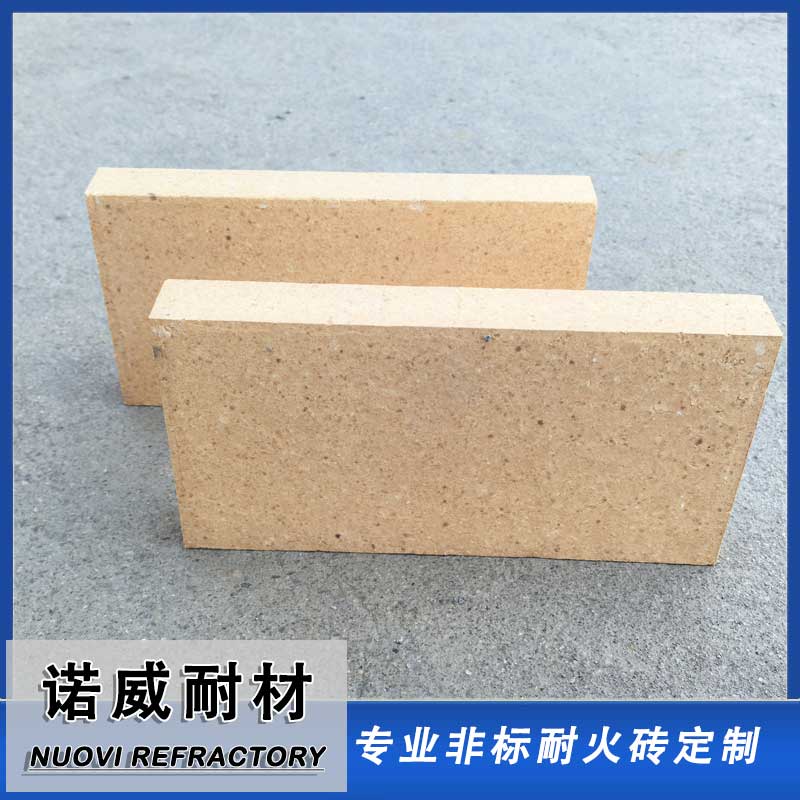
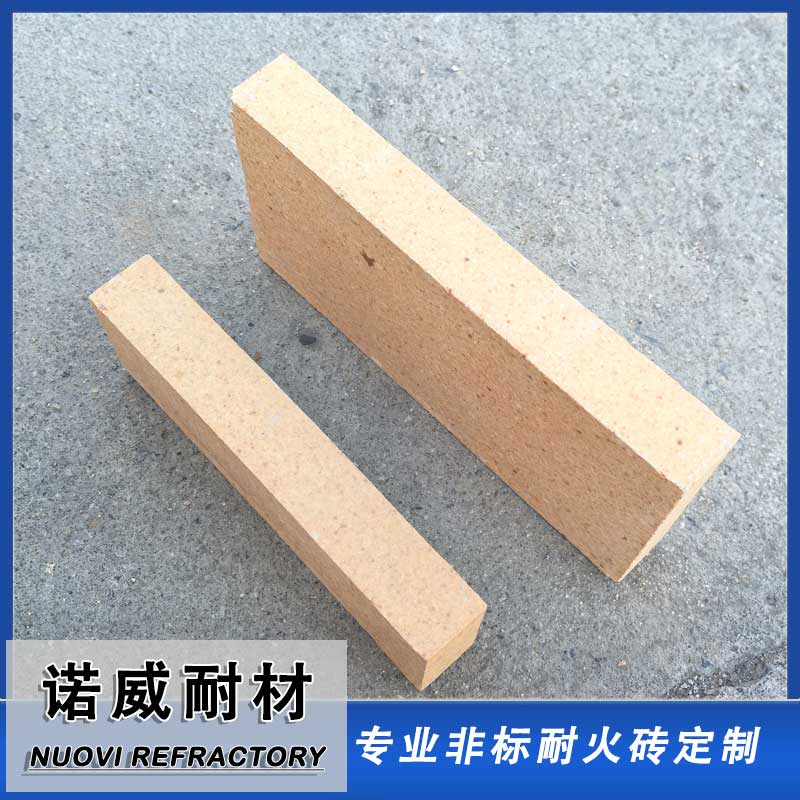
Flat Brick
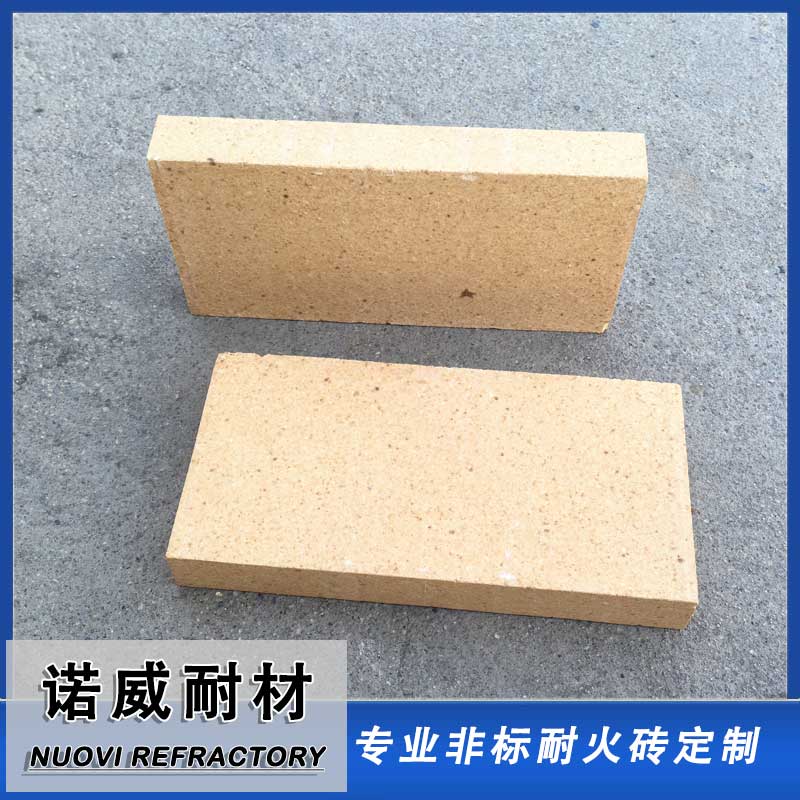
Clay Refractory Brick SeriesFlat brick is a thin-type clay refractory brick, suitable for applications requiring thin refractory linings or insulation layers. Flexible construction with strong adaptability.
| Parameter | Specification |
|---|---|
| Material | Clay Refractory |
| Max Service Temperature | 1400°C |
| Bulk Density | ≥2.0 g/cm³ |
| Cold Crushing Strength | ≥30 MPa |
| Al₂O₃ Content | ≥42% |
Material Introduction
Clay brick is a refractory product with Al₂O₃ content of 30-48%, made using clay clinker as aggregate and refractory clay as binder. The raw material for clay bricks is clay minerals. Refractory clay can generally be divided into soft clay and hard clay. In the manufacturing process, the former has good plasticity after adding water and sinters easily, mostly used as a binder; the latter is mostly calcined and used as clinker.
Clay bricks are weakly acidic refractory bricks that become stronger with increasing SiO₂ content, and are therefore commonly used as lining materials for acidic furnaces. Based on bulk density, they are further classified into ordinary clay bricks, low porosity clay bricks, and low creep clay bricks. By application, clay bricks can be roughly divided into: coke oven clay bricks, blast furnace clay bricks, hot blast stove clay bricks, glass kiln clay bricks, cement kiln large clay bricks, and carbon baking furnace clay bricks.
Product Features
- Thin design, space saving
- Flexible construction for multiple applications
- Combinable with other brick types
- Clay material, good value for money
- Multiple size and thickness options
Specifications
| Index | N-1 | N-2a | N-2b | N-3a | N-3b | N-4 | N-5 | N-6 |
|---|---|---|---|---|---|---|---|---|
| Refractoriness (℃) | ≥ 1750 | ≥ 1730 | ≥ 1730 | ≥ 1710 | ≥ 1710 | ≥ 1690 | ≥ 1670 | ≥ 1580 |
| Softening Temp. Under Load 0.2MPa T₀.₆ (℃) | ≥ 1400 | ≥ 1350 | - | ≥ 1320 | - | ≥ 1300 | - | - |
| Permanent Linear Change 1400℃×2h (%) | +0.1~-0.4 | +0.1~-0.5 | +0.2~-0.5 | - | - | - | - | - |
| Permanent Linear Change 1350℃×2h (%) | - | - | - | +0.2~-0.5 | +0.2~-0.5 | +0.2~-0.5 | +0.2~-0.5 | - |
| Apparent Porosity (%) | ≤ 22 | ≤ 24 | ≤ 26 | ≤ 24 | ≤ 26 | ≤ 24 | ≤ 26 | ≤ 28 |
| Cold Crushing Strength (MPa) | ≥ 30 | ≥ 25 | ≥ 20 | ≥ 20 | ≥ 15 | ≥ 20 | ≥ 15 | ≥ 15 |